



By Rex Golden • October 14, 2026
Kihei has the highest rental inventory of any zip code on Maui — and also one of the most active tenant pools. For property owners considering converting a home or condo into a long-term rental, that combination means opportunity. It also means competition. Here's how to approach it strategically.
By Rex Golden • October 7, 2026
In a market where South Maui condos and West Maui oceanfront properties often carry price tags that make the math difficult, Wailuku stands out as one of the most compelling buy-and-hold markets on the island. The reasons are straightforward: lower entry prices, stable tenant demand, and favorable price-to-rent ratios that are genuinely hard to find elsewhere on Maui.
By Rex Golden • September 30, 2026
Wailuku doesn't always get the attention that Kihei or West Maui commands — but it should. As the seat of Maui County government and the historic heart of Central Maui, Wailuku has an economic stability that most other parts of the island can't match. And over the past several years, it's been quietly transforming.
By Rex Golden • September 23, 2026
West Maui has always been one of the most desirable places to live on the island. Communities like Lahaina, Kaanapali, Napili, and Kahana draw long-term residents who want beach access, community character, and convenient proximity to employment and services. For rental property owners, that consistent desirability translates into real opportunity — if the property is managed well.
By Rex Golden • September 16, 2026
Whether you own a condo in Kaanapali, a townhome in Honokowai, or a single-family home in Lahaina, renting your West Maui property is one of the most effective ways to generate consistent income from an island asset. But successful rental ownership in West Maui takes more than putting a listing on Zillow. Here's how to do it right.
By Rex Golden • September 9, 2026
West Maui is home to some of the most iconic communities on the island — and some of the most distinct. From the recovering historic streets of Lahaina Town to the luxury estates of Kapalua, each neighborhood has its own character, housing profile, and investment dynamic. Whether you're considering relocating, purchasing a rental property, or simply trying to understand the West Maui landscape, here's what you need to know.
By Rex Golden • September 2, 2026
Many Maui homeowners reach a turning point — relocating, purchasing another property, or simply recognizing that an asset sitting idle could be generating income. Renting out your Maui home is one of the most effective wealth-building decisions available on this island. It's also one that rewards preparation. Here's what we'd want you to think through before you list.
By Rex Golden • August 26, 2026
Owning a rental property on Maui can be an excellent long-term investment. It can also be a significant source of stress if you go into it without understanding what successful management actually requires. At CTK Rentals, we manage over 100 long-term residential units across the island — from Lahaina and Kaanapali to Kahului, Kihei, and the North Shore. Here's what we've learned about what it actually takes to run a Maui rental well.
By Rex Golden • August 19, 2026
Maui has long been one of the most desirable real estate markets in the country — limited land, strong housing demand, and an island economy that continues to attract residents and remote workers. These are real structural advantages that support long-term investment. But buying a property on Maui doesn't automatically make it a good investment. We've seen well-located properties underperform because of bad pricing, deferred maintenance, or poor tenant selection — and we've seen modest condos in Central Maui consistently outperform coastal properties because they were managed well. Here's what the investors who do it right actually evaluate.
By Rex Golden • August 6, 2026
Hana presents a compelling paradox for real estate investors. On one hand, it offers some of the most resilient long-term property values in Hawaii — driven by extreme land scarcity, strict development limits, and a location so extraordinary that demand never disappears. On the other hand, owning property in East Maui requires a level of operational sophistication that goes well beyond what most rental property investors have encountered before. This is not a market for passive, hands-off ownership. But for investors willing to approach it correctly — with the right management infrastructure and a clear-eyed understanding of what the property requires — Hana can be a genuinely exceptional long-term hold.

The Road to Hana and Beyond: East Maui Real Estate and What Ownership Really Means Here

Rex Golden • July 29, 2026

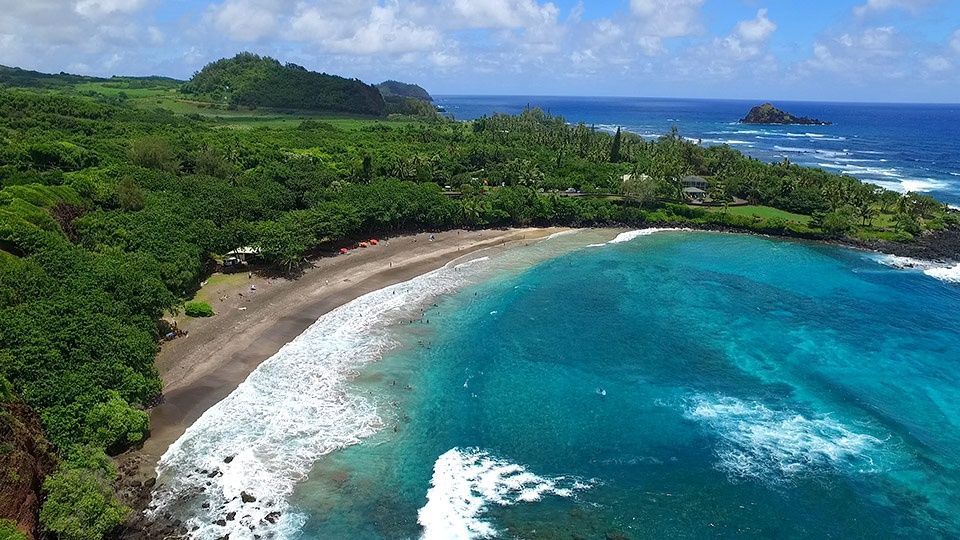
Most people experience the Road to Hana as a day trip — 620 hairpin turns, 59 single-lane bridges, waterfalls around every bend. But for a small, intentional group of people, that winding highway isn't a scenic drive. It's the way home. 


Hana is unlike anywhere else on Maui — or anywhere else in Hawaii, for that matter. No stoplights. No fast food. No shopping centers. What it has instead is the kind of rare, unhurried beauty that makes people rearrange their lives to be here. For property owners and investors, that extraordinary setting comes with an equally extraordinary set of operational realities. 

Understanding the Hana Lifestyle 

Commercial life in Hana revolves around a handful of deeply rooted local institutions — the historic Hasegawa General Store, which has served the community since 1910, the Hana Ranch Store, local food trucks, and the Hana Maui Resort. That's essentially it. There is no commuter infrastructure, no suburban convenience, and no anonymity. The community is tight-knit, deeply connected to the 'āina (land), and oriented around values of privacy, sustainability, and respect for the natural environment. 


The people who choose to live here long-term are making a deliberate lifestyle decision. They're not looking for proximity to Costco — they're looking for peace, space, and a genuine connection to one of the most beautiful places on earth. Understanding that profile is the foundation of understanding Hana's rental market. 


A Real Estate Market Defined by Scarcity 

Hana's geographical isolation and strict development limitations create a housing market with almost no new supply. The combination of extreme land scarcity, an absolute prohibition on large-scale commercial development, and the sheer remoteness of East Maui produces a property market with unusual long-term resilience. What's here holds its value because nothing new is coming to replace it. 


That scarcity also creates a distinct premium tenant pool. Over the decades, Hana has attracted high-net-worth individuals, creative professionals, executives, and public figures seeking complete privacy and genuine escape. The arrival of high-speed satellite internet has significantly expanded the pool of people who can work remotely from the jungle — and many of them are actively looking for quality long-term rentals in East Maui. 


The Realities of Remote Property Management 

This is where Hana ownership requires honest evaluation. Managing a property in East Maui from a distance is genuinely difficult — and doing it without local expertise is a path to asset depreciation. 


Hana is a two-to-three-hour drive from Kahului on a good day. When a plumbing issue arises at 9pm, or a storm-felled tree blocks a driveway, you can't call a mainland contractor or expect a Kahului vendor to make the trip. Effective management here depends entirely on established relationships with local tradespeople who live within the Hana community and can respond when it matters. Those relationships take time and local presence to build — and they're irreplaceable. 


Short-Term Rentals Are Not the Strategy Here 

Maui County's regulations on short-term vacation rentals are among the strictest in the state, and Hana is not an exception. Operating an unpermitted short-term rental in East Maui carries fines of up to $20,000 initially, plus $10,000 per day of continued violation. New Short-Term Rental Home permits are subject to geographic caps and frequent county moratoria — the process is arduous, multi-year, and uncertain. 


For the vast majority of Hana property owners, professionally managed long-term residential tenancy is the most legally secure, financially stable, and community-aligned path forward. It supports the local community's need for stable housing, avoids regulatory risk entirely, and connects your property with exactly the tenant profile that Hana naturally attracts. 


Ready to talk about your Maui rental property? 

If you own a property in East Maui and want to talk about what professional management looks like in a market this specialized, we're happy to have that conversation. CTK Rentals manages properties across Maui and understands the unique demands of remote ownership. 


Visit us at CTKMaui.com or call us to get started. 


By Rex Golden • October 14, 2026
Kihei has the highest rental inventory of any zip code on Maui — and also one of the most active tenant pools. For property owners considering converting a home or condo into a long-term rental, that combination means opportunity. It also means competition. Here's how to approach it strategically.
By Rex Golden • October 7, 2026
In a market where South Maui condos and West Maui oceanfront properties often carry price tags that make the math difficult, Wailuku stands out as one of the most compelling buy-and-hold markets on the island. The reasons are straightforward: lower entry prices, stable tenant demand, and favorable price-to-rent ratios that are genuinely hard to find elsewhere on Maui.
By Rex Golden • September 30, 2026
Wailuku doesn't always get the attention that Kihei or West Maui commands — but it should. As the seat of Maui County government and the historic heart of Central Maui, Wailuku has an economic stability that most other parts of the island can't match. And over the past several years, it's been quietly transforming.